|
Dear doctoral colleagues, interdisciplinary colleagues, and peers, I’d love to invite you to this term’s Play-in-Research Symposium at Guildhall School of Music & Drama, taking place on Monday 30th June in a lecture room in the Silk Street building (please ask at reception for directions). This relaxed, end-of-year event celebrates the role of play in artistic research — from serious silliness to methodological mischief — and I’ll be sharing a brief sliver of my PhD work as part of the afternoon programme. It’s a chance to stretch my wings a little away from the writing-up desk, and I’d be thrilled if you were around to join me and the other presenters. 🕒 Presentation: 3:15pm as part of an all day event running 11am - 4pm 🥂 Drinks & Nibbles: from 4:00pm (a lovely chance to catch up!) 📍 Recital Room TBC, Guildhall School, Silk Street Building The event is open to all — colleagues, students, friends, and guests are welcome but do confirm by RSVP with thanks. If you’re able to come, I’d be delighted to see you there. (P.S. I'm working toward submitting next spring, so light feedback or reflections on how it reads across disciplines would be warmly appreciated!) From Gesture to Mutuality: Electra’s Alphabet as Embodied Research
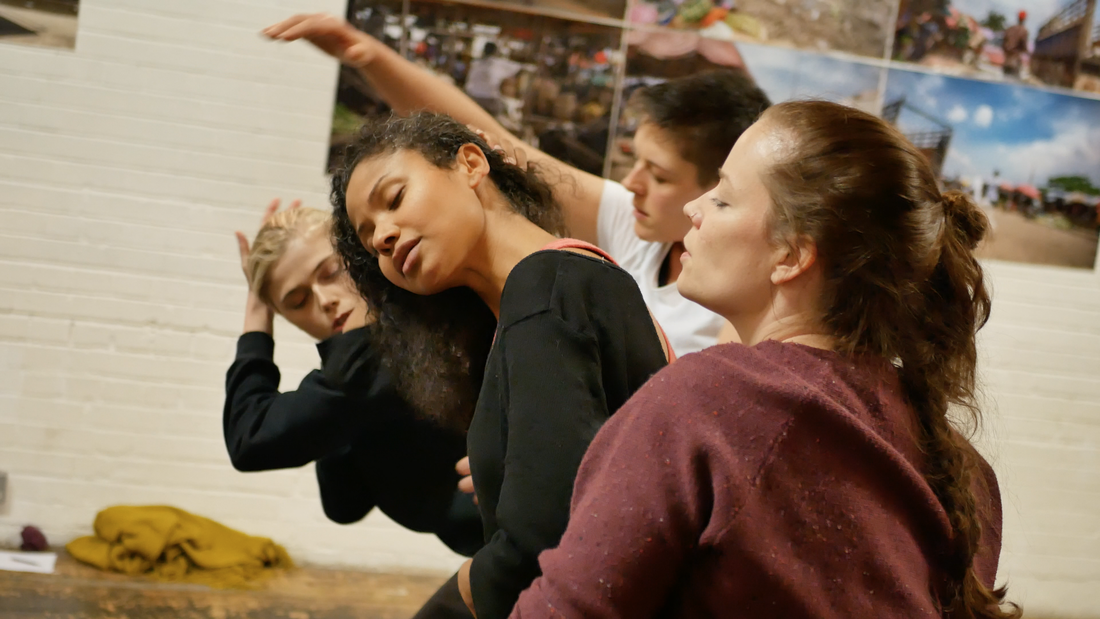
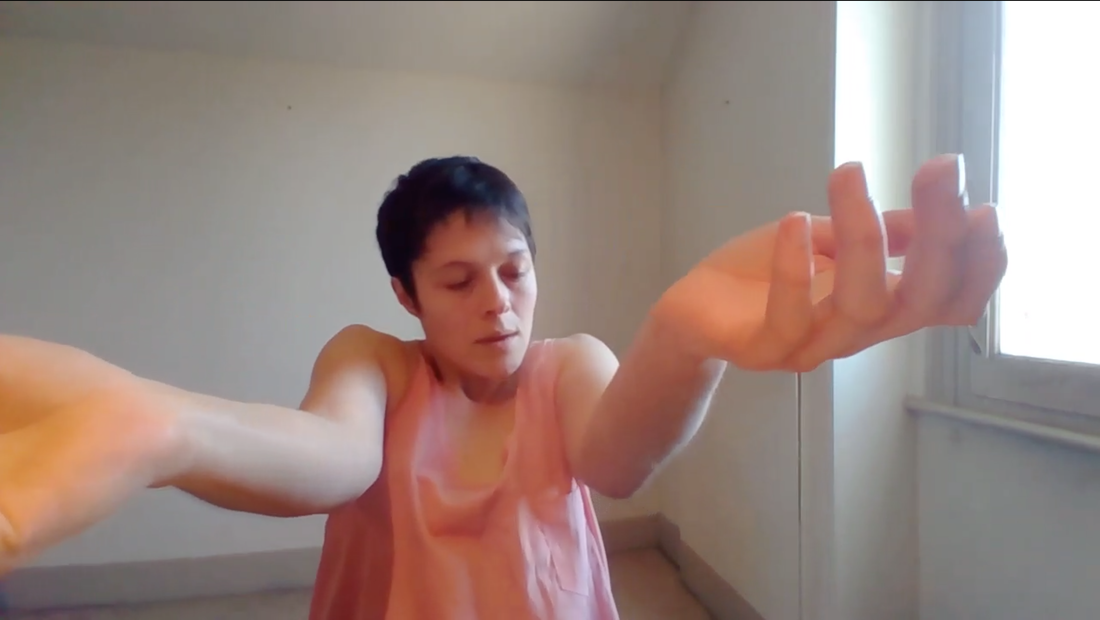
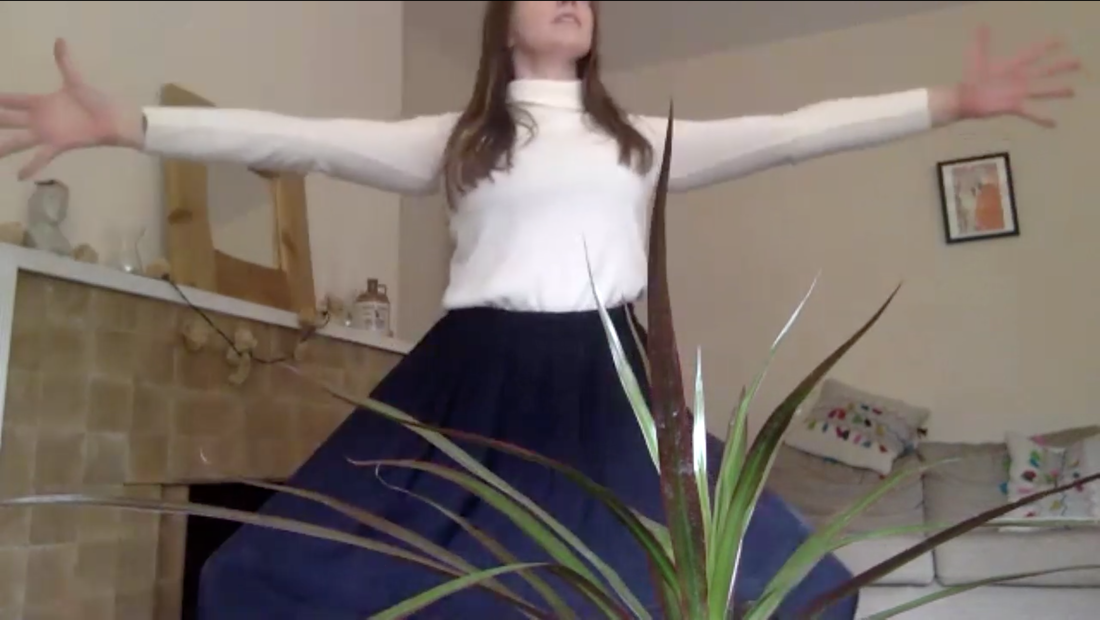
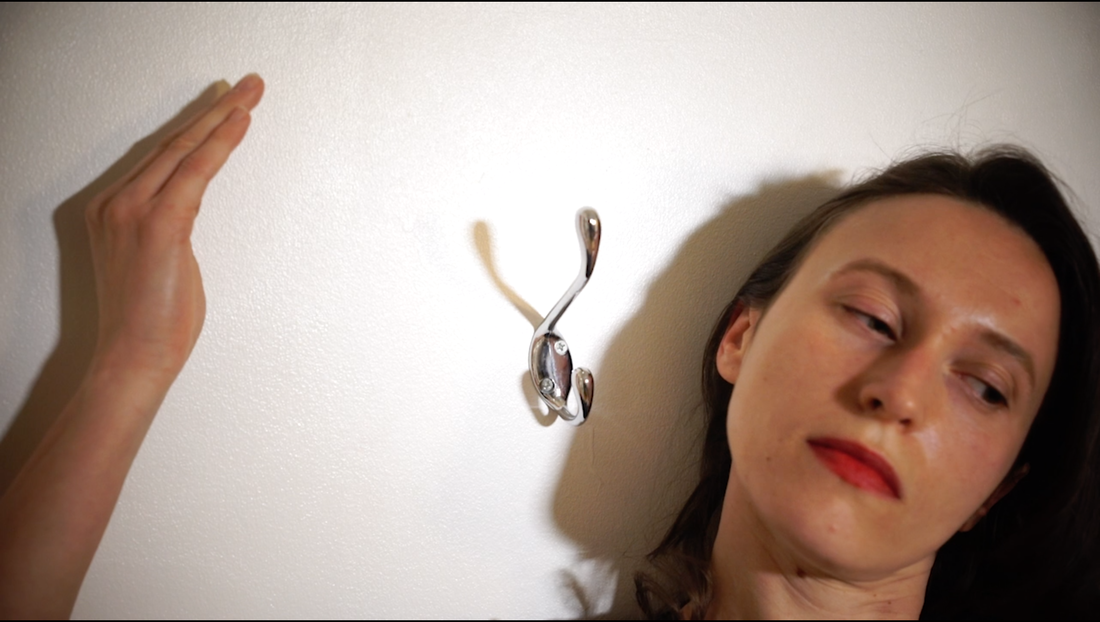
(From the PhD project: A Voice Lesson — Refunctioning Mutuality as Ethical Embodied Practice in the UK Laboratory Theatre Diaspora) This presentation shares findings from an ongoing practice-as-research PhD that reconceptualises Mutuality — a performance method rooted in laboratory theatre — as a contemporary, ethical methodology foregrounding actor training as a site of epistemological enquiry and creative agency. Grounded in the psychophysical tradition originating with Stanislavsky and later developed by companies like Gardzienice (where I trained and performed from 2000–2007), the research begins with a reflexive, embodied analysis of the title role I developed in Electra — a process I now call Electra’s Alphabet. These early gestural explorations became a departure point for critiquing coercive structures in lab culture and reimagining Mutuality as an inclusive, affective, and ethically-grounded method of embodied knowledge production. This refunctioning grounds a new framework: Integrated Physiovocality (IPV) — a six-stage cycle shaped by diversity-led collaborations (2019–2025), interweaving lab tools such as spinal awareness, physiovocal listening, and conscious behaviour mapping, guided by values of presence, intentionality, embodiment, and transdisciplinary fluency. The talk includes IPV demonstrations, archival Gardzienice footage, and excerpts from A Voice Lesson (Britten Pears Arts 2023) — a hybrid, split-stage film–music–theatre work spanning live, digital, and AI-generated dramaturgies. In one scene, two hands — one Black, one white — appear from a single body to revisit Electra’s Alphabet, rendered through AI-animated cosmos imagery. These dislocated sequences amplify touch as affect and articulate a collective, more-than-human identity — consciously resisting what Haraway (1988) calls the ‘God trick’. The presentation closes with two generative questions: • What if play is our primary site of knowledge? • How might Mutuality — as a practice, not a theory — transform how we train, perform, and co-create across difference? Still from a film by Liv Penny during A Voice Lesson in the Britten Pear Studio at Snape Maltings, Aldeburgh September 2023
0 Comments
Voicing Difference and the Listening Act: Mutuality as a Framework for Ethical Audience Engagement6/12/2025 EMBODIED VOICES CONFERENCE - Warwick university april 2025Abstract Voicing Difference and the Listening Act: Mutuality as a Framework for Ethical Audience Engagement Contemporary performance is undergoing an ethical reckoning. This research emerges at the intersection of contemporary feminist theory, embodied practice, and personal experience to ask: how might we reimagine listening - not as passive reception, but as an active, ethical, and mutual act? Grounded in doctoral research at the Guildhall School of Music & Drama, the study interrogates a legacy of hierarchical training inherited from the Polish laboratory theatre tradition. My early work with Gardzienice revealed how performance lineages can obscure dynamics of power, gender, and voice. Revisiting this training through a feminist critical lens, the research reimagines Mutuality (a lab method rooted in the Polish word wzajemność, or ‘togetherness’) as a critically reimagined framework for repositioning the performer in practice and performance. Developed over six years and across six performance-based case studies—with Black, trans, and neurodiverse artists - the project disrupts conventional reception norms, foregrounding listening as an embodied, situated, and politicised act. A narrative thread in the research is Virginia Woolf - not only a literary icon of early white feminism - but also a dramaturgical device for locating the self in practice. In one core project, A Voice Lesson, I was deliberately cast as a contemporary Woolf (renamed Orla). This casting both enabled and unsettled the research, confronting me with questions of complicity and responsibility as a teacher, director, and listener. The echo of Orlando - Woolf’s gender-shifting time-traveller - offered a dramaturgical structure through which to explore transformation, fluid identity, and systems change from early 20th-century lab theatre, through #MeToo, to now. Drawing on the work of Sara Ahmed, Rosi Braidotti, and Virginie Magnat, the research foregrounds four interdependent modalities of ethical listening: Intentionality, Presence, Embodied Listening, and Transdisciplinary Fluency. These are not linear steps but onto-epistemological dispositions - ethical tools for cultivating mutual encounters between performer and audience. Together, they underpin the development of the Integrated Physiovocality (IPV) Toolkit: a six-stage resource for actors, offering practical, critically-informed strategies for ethical engagement in contemporary performance-making in the UK. This 20-minute presentation shares key findings from the thesis, drawing on performance fragments and inviting the audience into a live dialogue around voice, reception, and responsibility. Keywords: Mutuality, Embodied Listening, Practice Research, Theatre Voice and Performance, Audience Ethics, Response-Abled Acting An accessible print version of this talk and accompanying slides are available in advance or on request. Please email [email protected] or speak to me at the conference to receive it in your preferred format.
An extract of the script2 Introduction: (NOTES TO SELF) KEY IMPULSES: Explain what is going to happen, desire to spark spontaneity “What an incredible pleasure to share this space with you today and to be able to test some new ideas out on The Pit stage. I am going to share an approach to performance training that I am developing. It’s based on my own training with the theatre company Gardzienice. However, Gardzienice is a male-led company and part of a male-led tradition stemming from Grotowski (the famous Polish director). What I’m interested in is what it means to be a female exponent of this work, and how the performer training practices it involves could be more female-led/feminized/feminist. My journey in research so far has led me to ask what female and feminist means and I have been working with participants to observe to what extent my sex might influence my practice. I have been hosting working groups of performers in a Laboratory format. One thing we’ve been working on is ‘A Feminized Alphabet of Gestures’ and that’s the main thing I’m going to share with you today. By gesture I mean a physical action made with the body and hand, which is associated with a particular word. The words include Femaleness, Sex, Identity, Body, Embody, Desire, Choice, Maleness, Agency, Difference, Gene, Love, Power and currently the full alphabet stands at around 40 words. The gestures are a tool for performers to visualise, feel into, bridge and interconnect their personal processes and the embodied self with the work of the actor developing a drama. On this improvised journey I will also use a number of building blocks from my core training including ‘scales of the spine’, ‘pitching intervals’, ‘body resonators’ before breaking down and focusing on a gesture or two with you. Do feel free to have a go at that point if you want, sitting or standing with vocality or not. I have composed 3 sound worlds using my cello, loop station, harmonium, voice and Ableton Live. This sort of work is normally done as a group – a chorus or an ensemble. As it’s just me, the instruments will be my ensemble and the cello will become an acting partner. What I’m sharing is not a completed performance, it’s a little slice of a training process. It won’t necessarily make narrative sense. What I’m exploring tends to be hidden or ignored in male-dominated settings, but in this space, I invite you to pay attention to the quality of presence, moments when you felt a connection to me or the work, or can you spot any moment in the improvisation when there is a breakthrough in my voice or body movement or with the text? AH sits down on floor near harmonium and opens a chord on the instrument AH: “To begin I’d like to sound check with you. The presentation will stretch in volume. One minute quiet and silent and the next loud or high. This reflects the nature of an explorative process working with voice, and once again feel free to hum along or join in to help equalise the dynamics” __________________________________________________________________________ 3 ERESHKIGAL/AIEE (Live acoustic): AH: “I will now break down the voices that you heard as I entered, an extract from a call to Ereshkigal, who is the queen of the underworld in the Ancient Mesopotamian sung-epic ‘Inanna’” Song Extract Ereshkigal x 2 Aiee x 2 __________________________________________________________________________ 4 After Gardzienice: AH begins to talk before getting up and walking across the space to MIDI keyboard “The last time I played on The Pit stage was in 2006 in the production, Electra. A show I created and toured with the Gardzienice company over 7 years. My lived experience of creating and playing the role was different to the conceptual work of the director. But no less valuable in terms of generating new knowledge. We created each other. He spoke and I did. When talking about Electra Staniewski, the director of Gardzienice, has said that, ‘Real ‘acting out’ occurs when the man is able to break through the limitations of his male conditions and assumptions to reach the secret and the enigma of the female body. Of course you cannot get it” he goes on, “without identifying with the female soul and vice versa’. AH walks to MIDI keyboard With 13 years distance to that work I am focused on the creative agency of performers in a process and facilitating that in others. I’ve been observing the tools that female directors use in their work after Gardzienice? And to what extent are these tools are feminist while my practice centres around what a Female-First approach might be.
|
AuthorAnna-Helena McLean Archives |
||||||||